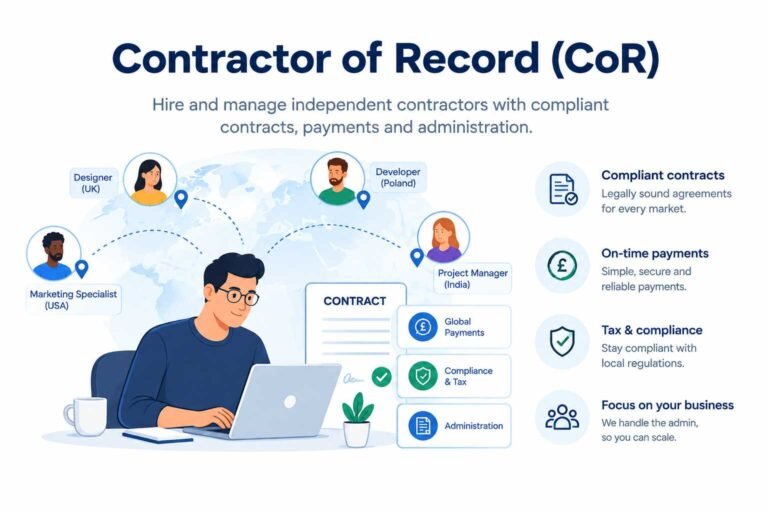

IR35 and Contractors: What UK Businesses Need to Know.
IR35 remains one of the most important compliance considerations for UK businesses engaging contractors through intermediaries.
The purpose of the off-payroll rules is broadly to ensure that workers who would have been employees if engaged directly are taxed in a similar way to employees.
Why does IR35 matter?
The financial consequences of getting contractor classification wrong can extend beyond the contractor’s invoice.
Businesses may face:
- Additional tax liabilities.
- National Insurance implications.
- Administrative costs.
- Disputes.
- Reputational damage.
- Retrospective compliance work.
For larger organisations, these risks become more significant as contractor numbers increase.
Who needs to consider the off-payroll rules?
HMRC states that the rules apply to public-sector clients and medium and large private-sector organisations in relevant circumstances.
Small private-sector clients have different responsibilities.
What should businesses assess?
A robust contractor assessment should consider the actual relationship rather than simply relying on the wording of a contract.
Relevant factors can include:
- Control.
- Substitution.
- Mutuality of obligation.
- Financial risk.
- How work is performed.
- Integration.
- Equipment.
- Business independence.
No single factor should automatically determine the outcome.
Can a Contractor of Record solve IR35?
A CoR can introduce an additional compliance framework around contractor engagement, but businesses should not treat it as a magic solution.
HMRC makes clear that outsourcing responsibilities does not automatically remove the organisation’s accountability.
A better approach for CFOs
Build contractor compliance into procurement and finance processes rather than treating it as an HR issue.
Before approving a contractor, ask:
- What is the actual working relationship?
- Where is the contractor based?
- Which entity is contracting with them?
- What classification process has been completed?
- Who is responsible for documentation?
- How will the relationship be reviewed if circumstances change?
This approach makes contractor management much more defensible.